Chinese Language Courses in Xi'an
Intensive One-on-One Chinese Classes


Intensive One-on-One Chinese Classes
- Personal study plans
- Best teachers and private lessons
- Full immersion experience
- Full services (study + single room accommodation)
- Start on any Monday
Summer Camp in China


Summer Camp in China
- Summer camp in China
- Interesting Chinese language classes
- Chinese cultural lessons + excursions
- Make friends from all over the world
Children Chinese Program

Children Chinese Program
- Summer/Family camp in China
- Interesting Chinese language classes
- Chinese cultural lessons + excursions
- Parents participate in all activities
- Beijing, Kunming, Chengdu, Chongqing
HSK Test Preparation Course


HSK Test Preparation Course
- Start anytime
- HSK experts with years of experience
- Get test scores improved significantly
- Intensive one-on-one Chinese class
- Full services (study + single room accommodation)
Chinese Language Course + Tour in China

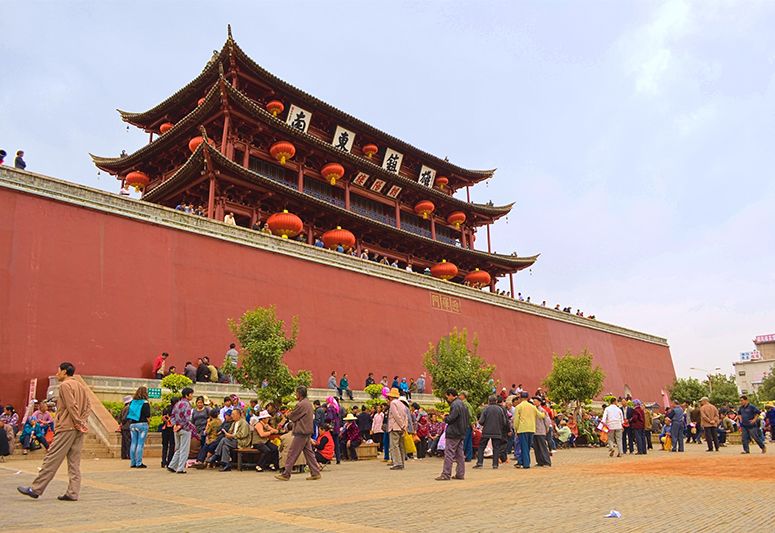
Chinese Language Course + Tour in China
- Private one-on-one Chinese lessons
- Full services (study + accommodation)
- Excursions and tours with your teacher
- Travel to Dali, Lijiang, Shangri-la, Beijing, Xi'an, Guilin, Shanghai, Zhangjiajie, etc.
Study Tour in China (for groups)

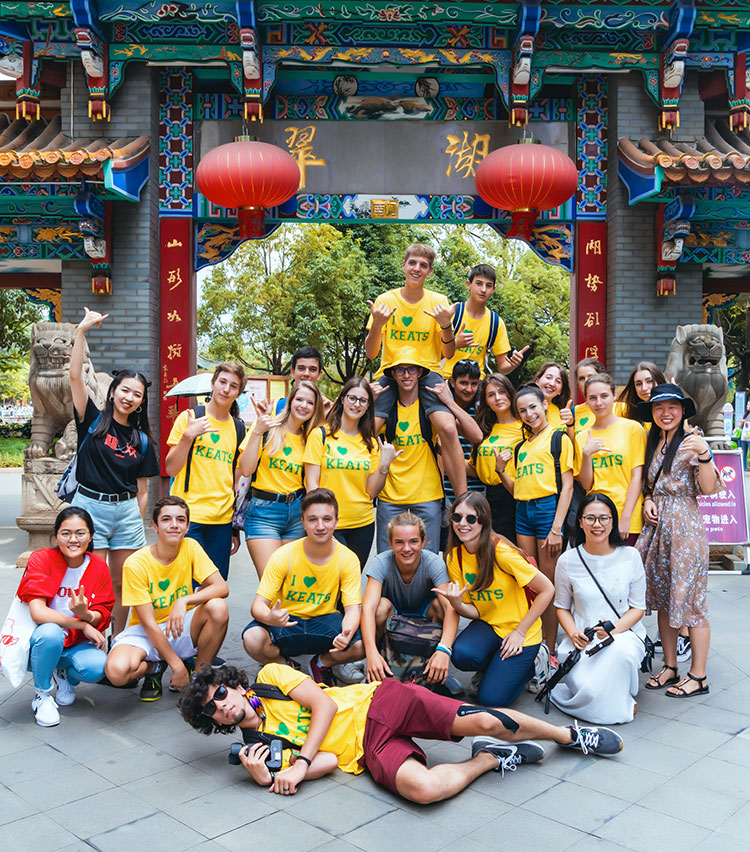
Study Tour in China (for groups)
- Designed for high schools, universities, companies, and organizations
- Chinese course with group activities
- Professional Chinese teachers
- A true Chinese immersion experience
Learn Chinese Online

Learn Chinese Online
- Live 1-on-1 online Chinese lessons
- Learn Chinese online anytime
- Study Mandarin anywhere
- Professional Chinese teachers
- Personal study plans


Intensive One-on-one Chinese Lesson
You can choose to study Chinese in Xi’an for 4 hours per day (20 hours/week) or 6 hours per day (30 hours/week). If you want to study Mandarin in China, the intensive one-on-one Chinese course is the fastest way to improve your Chinese.
We use unique teaching methods developed by Keats. Your Chinese teacher(s) will prepare your lessons according to your level of Chinese and your learning goals to ensure that you learn the most Chinese in the shortest possible time.
Dorm accommodation is included.

Accommodation in Xi'an
- Single room accommodation with a private bathroom
- Clean, safe and comfortable
- Central area in Xi’an
- Live close to the school, 5 minutes’ walk
Accommodation in Xi'an
Private Room with Private Bathroom


Why Learn Chinese in Xi'an?
Choose Xi’an to learn Chinese where the language is imbued with timeless history. As the ancient capital, the city offers a profound cultural context that breathes life into your studies. Here, you don’t just learn words; you discover their soul. Practice Mandarin with the city’s welcoming locals, whose clear accent provides the perfect model. From the shadow of the City Wall to the vibrant energy of its food alleys, every interaction becomes a vivid, immersive lesson, transforming your linguistic journey into an unforgettable experience of living culture.

Sightseeing After Class with Your Teacher
- The best thing about studying in Xi’an is that your teacher will accompany you to do sightseeing every day after class, to create a pure Chinese language environment for you. Your teacher will practice Chinese with you in real-life situations. Studying Chinese in Xi’an not only focuses on the Chinese language but also offers a chance to explore the city with your teacher.
- Note: The entrance ticket and transportation fee (if there is any) for sightseeing after class are not included in the tuition fee.
Beautiful Scenery in Xi'an
Immerse yourself in the language where ancient dynasties once spoke it, and every conversation echoes with the legacy of the Silk Road.


Learn Chinese in Xi'an
Over 10000 Students Have Studied at Keats

Places to Visit in Xi'an - The Terracotta Army
No visit to Xi’an is complete without witnessing the Terracotta Army, one of the most significant archaeological discoveries of the 20th century. This immense collection of life-sized, meticulously crafted soldiers, chariots, and horses was built to guard China’s First Emperor, Qin Shi Huang, in the afterlife. Each figure is unique, with distinct facial features and expressions. Standing before the vast pits, you feel the weight of ancient ambition and power. It is not just a sight to see, but a profound historical encounter that showcases the incredible artistry and organization of a civilization over 2,200 years ago.

Places to Visit in Xi'an - Xi'an City Wall
The magnificent Xi’an City Wall is the most complete ancient fortification surviving in China. Stretching 8.5 miles around the city’s core, it offers a unique perspective of Xi’an’s blend of old and new. The best way to experience it is by renting a bicycle for a leisurely ride along the broad, cobbled top. As you cycle, you gaze down upon traditional courtyards and modern high-rises, feeling the pulse of the city from a timeless vantage point. A walk or ride on the wall at dusk, when the lanterns are lit, is an especially magical and serene experience.

Places to Visit in Xi'an - The Muslim Quarter
Immerse yourself in a sensory feast at the bustling Muslim Quarter. This vibrant network of alleyways, centered around the historic Great Mosque, is the heart of Xi’an’s Hui community and its culinary soul. The air is thick with the aroma of sizzling spices and grilled meats. Here, you can sample iconic street foods like yangrou paomo (lamb and bread soup) and sweet persimmon cakes. It’s a place where commerce and culture have thrived for centuries, offering a lively, unforgettable glimpse into the diverse tapestry that has defined Xi’an since its days as the Silk Road’s start.

Places to Visit in Xi'an - The Giant Wild Goose Pagoda
An iconic symbol of Xi’an, the Giant Wild Goose Pagoda stands as a serene testament to the city’s profound Buddhist history. Built in the Tang Dynasty, it housed the sacred scriptures and Buddhist relics brought from India by the monk Xuanzang, whose epic journey inspired Journey to the West. The elegant, squared pagoda rises majestically from a beautifully landscaped complex. Climbing its steps rewards you with a panoramic view of the modern city. The nearby North Square comes alive at night with the magnificent performance of the largest musical fountains in Asia, creating a stunning contrast of ancient and contemporary.

Places to Visit in Xi'an - Shaanxi History Museum
To fully understand the context of Xi’an’s ancient wonders, begin your journey at the Shaanxi History Museum. Often described as a “cultural pearl,” its magnificent Tang-style architecture houses a treasure trove of over 370,000 relics. The exhibits guide you chronologically through the region’s history, from primitive societies through the glorious Zhou, Qin, Han, and Tang dynasties. Here, you’ll see exquisite bronze ware, majestic terracotta figures, and stunning gold and silver artifacts up close. It provides the essential narrative that connects all of Xi’an’s sites, making it an invaluable and enlightening prelude to your exploration.
Over 10000 Students Have Studied at Keats

Cuisine in Xi'an - Yang Rou Pao Mo (羊肉泡馍)
This is Xi’an’s most iconic dish, a hearty and interactive culinary experience. Diners first break a hard, flatbread into tiny pieces in a bowl, a ritual that requires patience. The shredded bread is then taken back to the kitchen and steeped in a rich, aromatic broth made from lamb, simmered for hours with a blend of spices. It is returned to you as a thick, flavorful stew, topped with tender slices of lamb, vermicelli noodles, and a sprinkle of fresh herbs. Eating Yang Rou Pao Mo is not just a meal; it’s a deep dive into the soul of Xi’an’s Hui Muslim food culture, offering warmth and comfort in every spoonful.

Cuisine in Xi'an - Roujiamo (肉夹馍)
Often called the “Chinese hamburger,” the Roujiamo is a deceptively simple masterpiece. It consists of a “mo,” a flatbread that is first baked in a clay oven until crispy on the outside and soft inside, then split open. It’s stuffed with finely chopped, stewed meat—typically pork belly, but lamb or beef are also common. The meat is seasoned with a secret blend of up to 20 spices and slow-cooked for hours until it becomes incredibly tender and juicy. The result is a perfect textural contrast and a burst of savory flavor, making it the ultimate handheld street food.

Cuisine in Xi'an - BiangBiang Mian (裤带面)
Famous for its complex, uncomputerizable Chinese character, BiangBiang Mian is a noodle dish that is as dramatic as its name. These are “belt” noodles, hand-pulled to an impressive width and length. Their thickness gives them a wonderfully chewy and satisfying texture. They are served tossed in a vibrant, scorching-hot chili oil that sizzles upon contact, along with garlic, vinegar, and soy sauce. Topped with spices and meat, each wide, slippery noodle delivers a powerful punch of flavor. It is a robust, peasant-style dish that embodies the bold and unpretentious spirit of Shaanxi cuisine.

Cuisine in Xi'an - Liangpi (凉皮) - Vegetarian
A quintessential cold dish, Liangpi is the perfect refreshment, especially during hot summers. It is made from wheat or rice flour, which is washed to create a starch that is then steamed into soft, chewy sheets or noodles. These cold skin noodles are served tossed in a bright, tangy sauce based on vinegar and mustard, with a kick of chili oil that can be adjusted to taste. Mixed with gluten pieces and fresh bean sprouts or cucumber shreds, it offers a delightful mix of textures. Its refreshing, spicy, and sour profile makes it an irresistibly light and addictive meal.
FAQ
What does the tuition fee include?
The tuition fee includes:
- 4/6 hours of one-on-one Chinese lessons per day Monday to Friday
- Accommodation (A clean and safe single/double room with private bathroom)
- Program Certificate
We also offer a list of free services for studying in Xi’an:
- Lunch Monday to Friday
- Airport/train station pick-up and drop-off
- Internet access use without limit
- Saturday excursions
- Laundry
- A tour of the surroundings (bank, supermarket, post office etc.)
- Medicine for minor illnesses
- Advisors available to offer help
- 24/7 support
- Access to The Chairman’s Bao online learning platform
- Visa application assistance
Where to eat in Xi'an?
Keats offers free lunch Monday to Friday at the school Monday to Friday.
Xi’an is a food lover’s paradise, renowned for its bold flavors and unique snacks. Your first stop must be the Muslim Quarter, the vibrant heart of the city’s street food scene. Here, you can feast on iconic dishes like Yang Rou Pao Mo (a hearty, interactive lamb and bread soup) and the famous Roujiamo (a crispy flatbread stuffed with savory meat, often called a Chinese hamburger).
For a more local, less touristy experience, head to Sajinqiao, a nearby network of alleys favored by residents. It offers a similar array of delicious food in a more relaxed atmosphere.
Don’t miss the chance to try Xi’an’s incredible noodle dishes. Slurp on a bowl of Biángbiáng Miàn—thick, belt-like noodles topped with chili oil and spices—or sample the sour and spicy Liangpi (cold skin noodles).
I see that the programs in Xi'an include accommodation. How much would it cost if I find my own accommodation?
It is also no problem to only take the one-on-one lessons in Xi’an. The tuition fee without accommodation is USD 700/week for 20 hours of one-on-one lessons, and USD 1050/week for 30 hours of one-on-one lessons.
LEARN CHINESE IN CHINA WITH KEATS
Nathan's Story at Keats
Pass the HSK 6 in 6 Months
OVER 10000+ STUDENTS
HAVE STUDIED AT KEATS
One thing I really liked was that I was able to work with my teacher to make an individual plan of study. Another really nice thing is that you live at the school, you feel completely safe. You always have a group of people who are willing to do things with you on the weekends or in the evenings. They are serving you all the 3 meals a day, the food was excellent.
I come to Kunming because I think the environment in Kunming is better and I heard that Keats School is better. I like the small group Chinese class because my classmates study hard and our teachers are very good. I like the teaching method of Keats because I like the activities at Keats. I think Yunnan is a particularly beautiful Chinese province.
About studying Chinese here, I think the living condition is very convenient because the dorm is very close to the classroom. Our teachers really enjoy teaching Chinese. They are also very passionate. Compared with other cities in China, Kunming has really good weather.
I’ve had a really great time here. I’ve studied a lot with my teacher who was fantastic. Keats School tried very hard to match its students with really good teachers that their personality works very well together. I really enjoy studying Chinese at Keats and I will definitely come back.
At Keats, I have a lot of opportunities to practice what I have learned. I really like this school, because I can learn Chinese in one-on-one style, so I think this is the best immersion program in China and my teacher is the best teacher. I feel that without my teacher, my Chinese will definitely not improve so much. I’m very happy because, at Keats, I have improved my Chinese significantly.
They really care about what our interests are, what questions we have, what requirements we have. Then they adjust our Chinese language program content according to the situations. One teacher and one student, so it is easy to keep your focus for the 6 hours of immersion Mandarin lessons. It is very convenient to study, live and eat in one building.
I’ve been at Keats school and Kunming now for one month doing the one-on-one Chinese lessons with two different teachers. I really enjoy it. Both of my teachers are very friendly and patient. They really helped me to improve my Chinese, both of my reading and speaking. I really enjoy studying Chinese in Kunming as well. This city is really beautiful and the weather is nice, the air is clean. It’s one of the best cities in China to study Chinese.
I really enjoy studying Chinese in Kunming at Keats. The teachers are great and my classmates are awesome. It is an unforgettable experience for me. I also got the chance to travel to other places in Yunnan. Those places are amazing and you definitely need to visit these places when you study Chinese in China at Keats.